B2C · Marketplace · In-House
HeyCar Growth Experiments & Mobile Platforms
Combined rapid experimentation with a native mobile bet so HeyCar could close the gap to mobile first marketplaces, double engagement where measured, and ship leadership aligned lead generation.
Experience Design & Labs Lead
HeyCar (VW Group) · Berlin
2020 to 2021
iOS · Android
Executive Summary
HeyCar entered Germany’s used car marketplaces behind Mobile.de and AutoScout24 on native quality while holding strong web traffic that did not convert intent at parity.
I led research and design for growth experiments and HeyCar’s first native apps, aligning executives on a mobile first roadmap and shared funnel instrumentation.
Engagement roughly doubled on measured journeys, native apps beat web on lead generation, and leadership adopted experimentation as a repeatable portfolio muscle.
The core mission
Ship evidence led bets: validate costly service ideas before logistics spend, then win the native surface where German shoppers already compare inventory, price, and dealer trust on their phones.
Strategic Landscape
Germany’s classified leaders already trained buyers to expect fast filters, saved searches, and dealer outreach from a pocket sized product. HeyCar’s responsive web footprint captured curiosity, yet the strategic risk was existential in a category where switching costs are low and inventory discovery is the product.
Volkswagen Group backing gave us brand trust and supply side access, but not infinite runway to chase every service idea. If we stayed web only while competitors doubled down on native retention loops, we would keep paying acquisition for traffic that leaked before high intent leads reached dealers.
Diagnosis
The gap was not “we need more features.” It was a portfolio question on where to concentrate design, engineering, and data science so the next euro of investment improved measurable intent, not vanity traffic.
User problem
Shoppers researched on phones while standing in parking lots and on commutes. Mobile web introduced friction just as they compared stock, financing hooks, and dealer response times. Competitors’ native apps set the baseline for speed, saved flows, and perceived reliability.
Business problem
Lead volume without intent quality wastes dealer capacity and erodes trust in the marketplace. Leadership needed to decide whether native investment was mandatory, and which adjacent services deserved MVP level funding versus a cheaper proof.
Organizational problem
Strategic design, growth, product, and data science each held pieces of insight, but no single squad owned “mobile marketplace outcomes” end to end. Without shared instrumentation, teams debated opinions instead of converging on funnel metrics tied to dealer revenue.
Team and operating model
Experiments only work when design, PM, engineering, and data science share a hypothesis sheet and the same funnel IDs. I stayed embedded with our data partners so research stimuli, feature flags, and success criteria stayed aligned from sketch to readout.

Strategic Response
We would not greenlight logistics heavy services without behavioral proof, and we would not debate native forever while competitors widened the retention gap.
Instrument before you argue
Fake door over fleet
Prestige targeting via data science
Native as the lead KPI surface
Split design sprint ownership
Trade-off: We sacrificed a textbook five day sprint and some polish velocity in exchange for leadership attendance, faster learning cycles, and a single accountable squad narrative. Interest and intent lived in one funnel (postal code for curiosity, email for sales ready follow up) while lead generation stayed the executive north star for the native launch.
From signals to shipped bets
Each milestone moved us from abstract strategy to something executives could screenshot.
Market signal
Hack week commitment
Client side experimentation
Executive readout

Design & Delivery
heyChauffeur: validate demand before wheels turn
Research finding
Consumers wanted flexible test drives, but logistics, insurance, and depreciation made a full MVP ruinously expensive if the hypothesis failed.
Design decision
We prototyped an in platform booking funnel with two offers (free versus 100 EUR for up to three cars) and measured postal code plus email steps as separate intent layers.

Research finding
We needed Prestige segment truth without waiting for months of qual recruitment.
Design decision
Data science targeted Prestige userIDs on return visits, while we mirrored the same UX for broader cohorts to compare behavior, not just anecdotes.
Native apps: sprint, learn, ship
Research finding
Mobile web attracted phone traffic, but usability studies showed persistent friction in filters, onboarding, and dealer handoff compared to native patterns users already knew from competitors.
Design decision
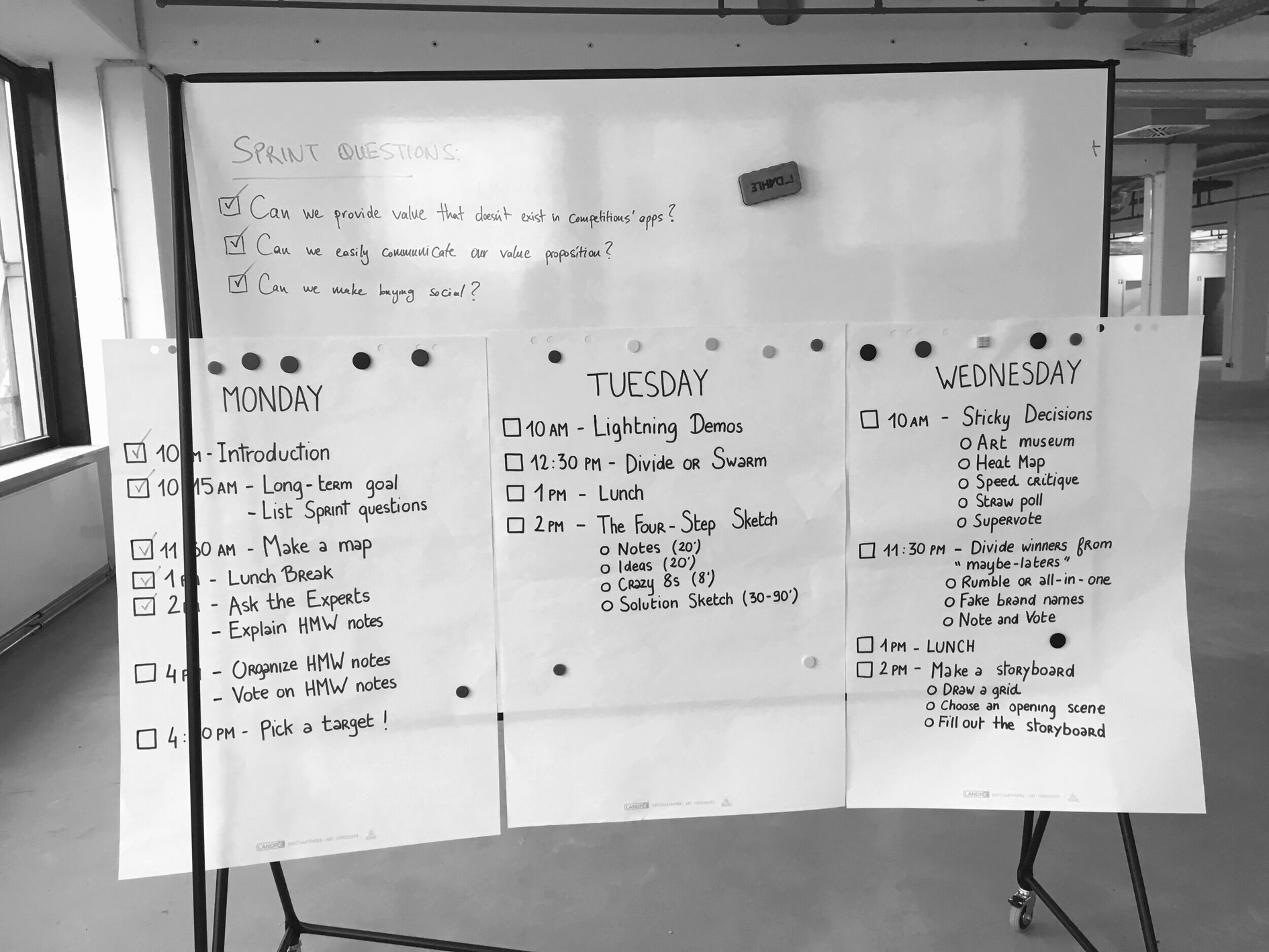
We ran a condensed design sprint with CPO and strategic design in the room, locked a storyboard, then let heyLabs iterate prototypes against lead generation KPIs before App Store and Play submission.


Impact
2×
Engagement uplift on instrumented mobile journeys after we prioritized native patterns and experimentation learnings in the roadmap.
Lead gen
Native apps beat the web product on lead generation, the KPI leadership used to justify continued investment in mobile.
Validated
heyChauffeur funnel proved measurable intent before we committed to logistics, insurance, and fleet coordination spend.
These outcomes were reviewed with managing directors using the same dashboards the squad watched daily, not a sanitized monthly rollup.
Transformation
Beyond the metrics, HeyCar learned to treat growth as a portfolio of bets with kill criteria, not a sequence of heroic launches.
Evidence led roadmap
Shared tooling
Design at the center
Leadership Principles
Prove intent before ops
Adapt rituals to power calendars
Make data science a co author
Looking ahead
The native apps gave HeyCar a credible pocket presence, while the experimentation stack created room for more service bets at bounded risk. Next horizons were deeper personalization on listings, dealer side workflow parity, and extending validated services into fulfillment only when metrics repeated in multiple regions.