B2C · Marketplace · In-House
HeyCar Mobile App
Led HeyCar’s first native iOS and Android apps from leadership pitch through design sprint and heyLabs build, beating web on lead generation and tightening onboarding around real filter first behavior.
Experience Design & Labs Lead
HeyCar (VW Group) · Berlin
2020 to 2021
iOS · Android
Executive Summary
HeyCar launched on responsive web in a market where Mobile.de and AutoScout24 already set native expectations. Traffic skewed mobile, but usability data showed we were leaving high intent leads on the table.
With the Head of Strategic Design, I framed the investment case for managing directors, then led the design sprint and storyboard decisions that unlocked heyLabs to build, test, and ship both stores.
The native apps outperformed web on lead generation, our executive north star, with onboarding and subscription flows rewritten after users insisted on filtering inventory before browsing categories.
The core mission
Deliver a dealer grade native journey that respects how Germans actually shop cars on their phones: compare stock fast, trust the handoff, and convert intent into qualified leads without phone tag.
Strategic Landscape
Used car marketplaces in Germany are a attention war: massive inventory, thin margins, and dealer SLAs that punish low quality leads. HeyCar’s web experience earned visits, yet competitors’ native apps owned the rituals shoppers use when they are one parking lot away from a test drive decision.
If we stayed mobile web first, we would keep optimizing a surface users treated as temporary. Native was the strategic bet to control onboarding, notifications, and dealer conversations in one coherent product story.
Diagnosis
The product question was not whether phones mattered. They already dominated sessions. The question was whether HeyCar would own that journey with product craft or rent it from the browser chrome.
User problem
Shoppers tried to filter and compare stock on small screens while standing in lots and on transit. Mobile web added latency and layout debt just as they needed confidence in price, availability, and dealer responsiveness.
Business problem
Lead generation is how dealers fund the partnership. If native competitors delivered smoother inquiry flows, our web only path looked like a funnel leak in sales conversations, not a UX nit.
Organizational problem
Busy executives could not disappear for five straight days, yet the sprint needed their authority to lock scope. Design had to orchestrate a split model between leadership workshops and heyLabs execution without losing narrative continuity.
Team and operating model
The sprint core combined CPO, strategic design, product, and design leadership for fast decisions, while heyLabs owned high fidelity prototyping and usability passes. I facilitated the workshop rhythm and guarded the storyboard so build work stayed tied to KPIs, not side quests.

Strategic Response
Native had to earn funding with a leadership grade narrative, then earn retention with measurable lead quality, not launch press alone.
Quantify the mobile ceiling
Lock exec time surgically
Filter first onboarding
Lead gen as acceptance test
Trade-off: We traded textbook sprint purity for attendance and velocity. The narrative stayed tighter because executives co signed the storyboard, even though the calendar choreography was harder for me as facilitator. Lead volume and quality stayed the north star, with usability supplying guardrails so we did not ship a fast app that trained users to bounce.
Sprint operating model
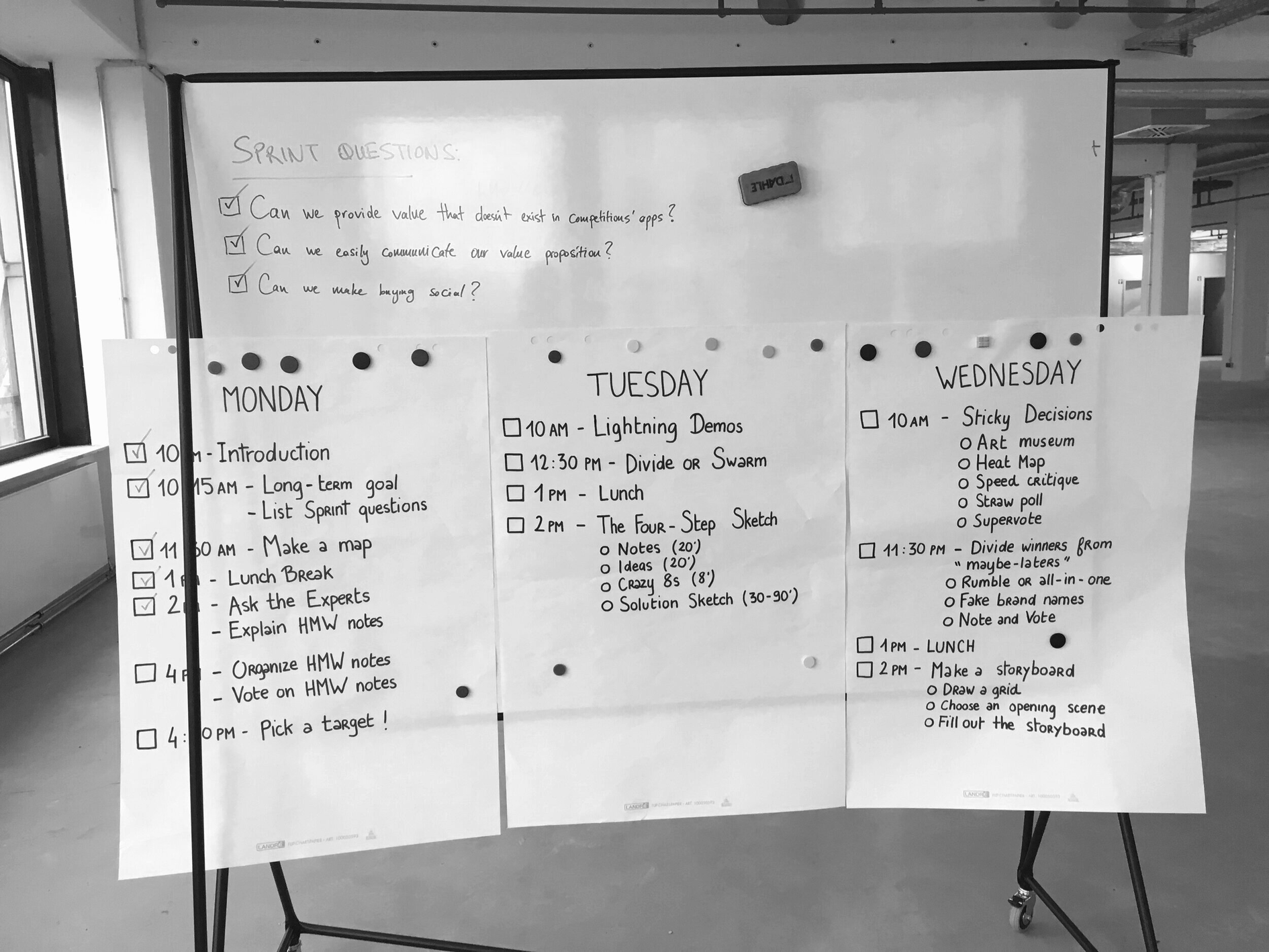
We kept the spirit of the Google Ventures sprint, but adapted the choreography to HeyCar’s matrix.
Days 1 to 3 with leadership
heyLabs execution window
Continuous usability

Design & Delivery
Evidence that shaped the interface
Research finding
Mobile web sessions showed high drop off between discovery and dealer contact, especially when users tried to refine inventory quickly on the move.
Design decision
We prioritized native navigation patterns for filtering, saved flows, and clearer dealer handoffs so the product felt purpose built, not shrunken desktop.

Research finding
Users rebelled against category first onboarding that mirrored marketing site maps.
Design decision
We pushed filtering and subscription education earlier so the first session felt like a serious shopping tool, not a brochure.


Impact
Lead gen
Native apps beat responsive web on lead generation, the KPI managing directors tracked for dealer satisfaction.
2 stores
Shipped coordinated iOS and Android releases so marketing and dealer ops could message one native promise.
Onboarding
Reworked first run experience after studies showed users wanted filters before categories, improving task success in test sessions.
Numbers stayed tied to dealer conversations, not vanity downloads, which kept post launch debates grounded.
Transformation
The sprint gave HeyCar a repeatable template for how leadership participates in discovery without becoming a bottleneck to build velocity.
Shared vocabulary
Native credibility
User anchored iteration
Leadership Principles
Facilitation is strategy
Ship the decision record
Listen for sequence
Looking ahead
Winning the first native release opened the roadmap for deeper personalization, dealer side tooling, and lifecycle messaging now that HeyCar owned install real estate on customer phones.